
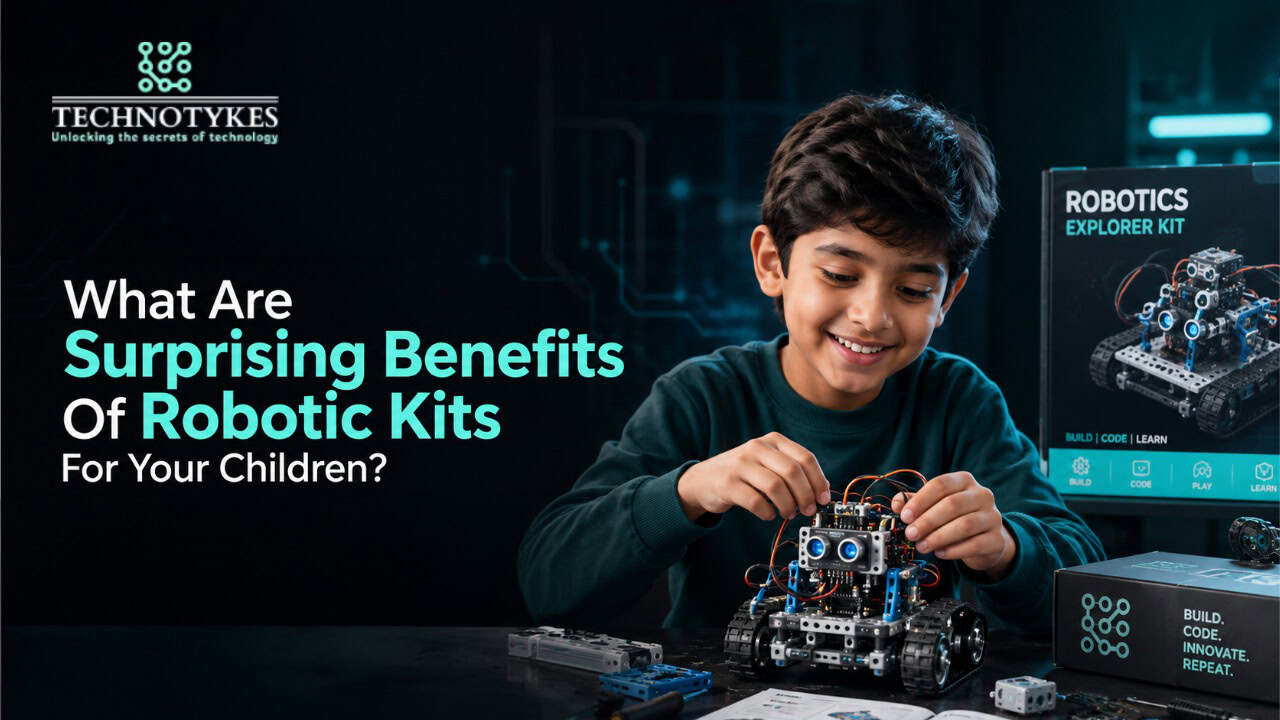

Technology has become an essential part of kids’ education, and robotics is the most exciting way to introduce young learners to science and innovation. Robotics kits for kids were designed to make learning interesting and fun while they build their future and develop their skills. Robotic education was brought to enhance hands-on activities and can inspire creativity in kids, boost confidence, and induce a lifelong interest in science, technology, engineering, and mathematics. In this blog, you get to understand the importance of robotics kits to kids.
Benefits of robotics kits for kids
Improves fine motor skills
Children should use their fingers in coordinated ways, directly boosting strength in muscles used for writing and handling certain tasks. Constructing small components helps kids develop hand-eye coordination and tool handling proficiency. Assembling the delicate microchips, LEDs, and batteries into different chambers teaches children how to handle pressure regulation carefully.
Encourages hands-on learning
Children learn by building and experimenting with real objects rather than being taught and reading information from textbooks about technology. This practical approach can help children improve their understanding skills because kids are different. Some are good at critical thinking but bad at reading, while robotics technology benefits both. Robotics allows kids to concentrate during maths and physics because they work on ratios, angles, and speed, which becomes visible and easy to grasp.
Introduces coding in a fun way
Many robotic kits use drag-and-drop coding platforms that make programming easy for starters. As kids boost their confidence, they can proceed to text-based programming languages. Instead of reading boring rows of text and writing, robotic coding brought living, moving toys, and it transformed programming from a dry computer science subject into an interactive class with moving objects. Gamification allows kids to see themselves as future video game creators by using code as a remote control to guide their creation. Robotics kits encourage team collaboration when they are assigned to make a robot perform a task.
Develops problem-solving skills
Constructing a robot requires children to think, to face real-world challenges, find solutions for different situations and learn from their mistakes. If kids are using textbooks, they only get one answer; unlike in robotics, they find many ways to solve an issue at hand by testing, failing, and adapting. This approach helps kids strengthen local thinking and resilience by providing plenty of solutions when they discover that many different code combinations can tackle the same problem. Robotics builds perseverance in kids when they continuously address bugs and teaches them to see failure in simple data-fetching steps, rather than a permanent loss.
Conclusion
Robotics kits for kids provide more than entertainment; they offer an interactive way of learning coding, encourage hands-on learning and foster problem-solving skills whilst encouraging creativity and boosting confidence. Introducing kids to robotics at an early stage needs support from parents and teachers to help them build important skills that equip them for future academic and career opportunities in a modern, technology-driven world. Robotic kits played a significant role by allowing children to shift from being passive tech consumers to active creators and programmers. Technotykes offers real-world robotics classes to strengthen your kids’ creativity through our engaging, interactive courses, and we provide early exposure to build comfort with automation and engineering concepts for your children’s future workforce. Ms Pritika Gandhi provides the best robotics classes to empower children’s minds and helps them gain easy skills in coding courses.
FAQ’s
- At what age are children expected to learn robotics?
At the age of 5-7, children are expected to learn basic robotic sequences, movements, and pattern recognition.
- Are robotic kits safe for girls?
They are safe; no physical harm to them. They are designed for both genders and are highly recommended in schools to remove gender gaps in STEM fields.