
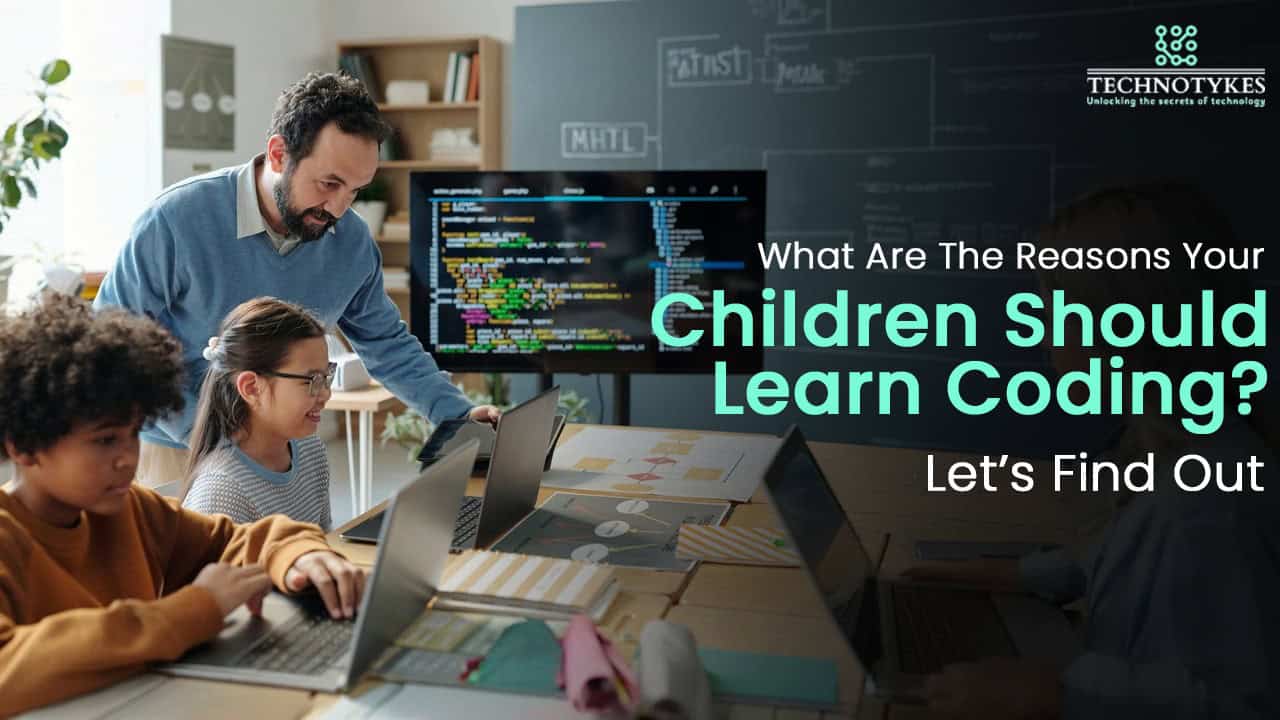

Coding challenges children to develop problem-solving skills, which can help them pave their career path, help them become creative and improve their academic performance. Coding for children involves giving the computer instructions through programs like Scratch or Python to build apps, games and websites. Instead of children spending so much time on screen as consumers, they can utilise that time to learn something, so that they learn skills and improve their mindset. This blog explains why children should learn coding.
Develops problem-solving skills
Coding is one of the best ways to train a child to become a problem solver. Learning to code can push their mind to break down complex problems, to logically analyse problems by identifying them and finding ways to solve them. This grooms them into critical thinkers and provides solutions to problems.
Encourages creativity and innovation
Coding helps children tap into their creative mindset. It challenges a person to think outside the box when creating games, apps and animation, unlike just spending time on cartoons and other shows on screen. This time can be used for them to be more creative whilst enjoying their time. Hence, screen time won’t only be for consuming information but also for improving their creative mindset.
Builds resilience persistence
A lot of mistakes can occur while learning coding. These kinds of tasks help children to learn from their mistakes and learn how to handle them. It helps them develop a resilient mindset of persisting till they find a solution to the problem. Through the trials and errors, children are able to have a stronger mindset that helps them withstand problems.
Enhances academic performance
Coding challenges the mind. It involves mathematical and logical problems that are presented in a fun way. As such, children are able to improve in math and also logical reasoning; as a result, they improve in their academic performance. Coding motivates children to tap into critical thinking, problem-solving mentality and their creative mindset, which helps them to deal with different subjects.
Prepare for future career
Coding helps children develop computational skills. Introducing computational skills at an early stage helps children to get familiar with the basic skills, and as they grow, it becomes easy for them to develop more complex skills in technical learning. It opens them up to opportunities to create advanced technology, or they can venture into different sectors since the tech world is diversified.
Some of the coding activities that a child can indulge in
- Treasure hunts
- Coding exercises
- Story sequence
- Solve a maze
- Drawing algorithms
- Binary bracelets
- Cupstack coding
Conclusion
Teaching children to code can be one of the best ways to make screen time a productive time. Not only will they be entertained, but they will also develop important skills that can pave their future. Parents can gradually introduce different tasks for them to learn until they become experts in coding. This can be done with the help of Technotykes, a training centre that focuses on helping children develop computational skills. Ms. Pritka Gandhi’s training centre has the advanced facilities, a trained team and the zeal to teach your children coding. All you have to do is sign up your children for these training sessions, and their journey of becoming coding experts will begin.
FAQ’s
- How can I introduce coding to children?
You can introduce coding through improvising interactive, play-based platforms such as Scratch, introducing coding games or toys to gradually introduce fundamental concepts.
- What is the best age to introduce coding to children?
A parent can introduce coding to children around the age of 5 or 7. This can involve the gradual introduction of basic concepts so that they slowly adapt to them.